


FIXED SEATING SOLUTIONS
Fixed Seating for Theaters, Auditoriums & Stadiums
From intimate auditoriums to large-scale stadiums, Preferred Seating designs and installs fixed seating systems built for comfort, durability, and long-term value.

Comfort-First Design
Ergonomic seat profiles, proper row spacing, and contoured backs keep audiences comfortable through the longest performances and events.

Built to Last
Commercial-grade materials and secure floor or riser mounting stand up to years of daily use and heavy traffic.

Nationwide Installation
Our professional installers handle layout and installation anywhere in the United States, from single rooms to full venues.
Important Planning Considerations
Seat centers, row spacing, mounting method, and accessibility all shape how your fixed seating performs — and how your audience experiences it.
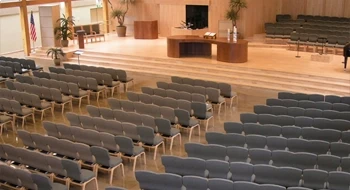
Seat Centers & Row Spacing
The distance between seats and rows affects both capacity and comfort. A few inches can mean the difference between a cramped room and a comfortable one.
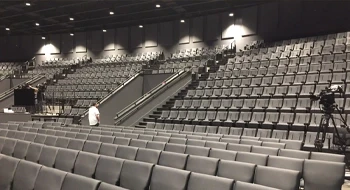
Sightlines
Riser height, floor slope, and seat location all influence how well every seat can see the stage, screen, court, or field.
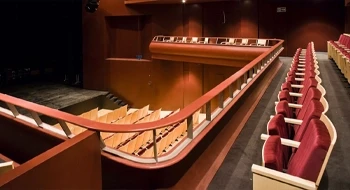
Floor & Riser Mounting
Fixed seating can be mounted directly to the floor or to a stepped platform, depending on the room, cleaning needs, and construction.
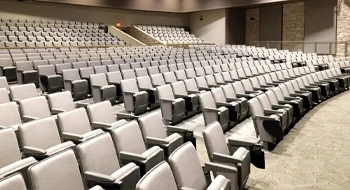
Upholstery & Components
Seat pans, backs, armrests, end panels, and aisle lights all affect appearance, comfort, and long-term maintenance.
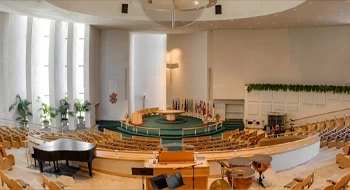
Accessibility & Capacity
Aisles, exits, accessible positions, and companion seating need to be part of the plan from day one, not an afterthought.
Replacement & Long-Term Value
A seating system with available replacement parts protects your investment and keeps your venue looking its best for years to come.
Fixed Theater, Auditorium and Stadium Seating
Important terms and planning considerations for your next seating project.
When choosing fixed seating, a successful project must balance comfort, sightlines, durability, accessibility, traffic flow, appearance, and maintenance. That is why seating terminology matters — when you know the terms, you can ask better questions, compare proposals accurately, and avoid surprises later.
Fixed Auditorium Seating: Seat Centers, Row Spacing and Sightlines
One important term is “seat center.” Seat center refers to the distance from the center of one seat to the center of the next. It affects row capacity and personal space — a few inches can make a surprising difference.
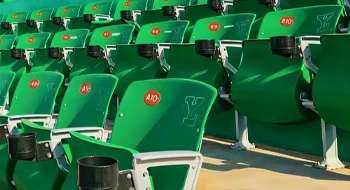
Fixed Stadium Seating: Floor Mounting, Risers and Anchoring
How your seating attaches to the building matters as much as the seat itself.
Another group of terms relates to how seating is attached to the building. “Floor mounted” seating is secured directly to the floor. “Riser mounted” seating is attached to the vertical face of a stepped platform or riser. The best choice depends on the room, cleaning needs, floor construction, and design.
Fixed Theater Seating: Upholstery, Seat Backs and Components
The visible chair gets most of the attention, but several components create a dependable seating system.
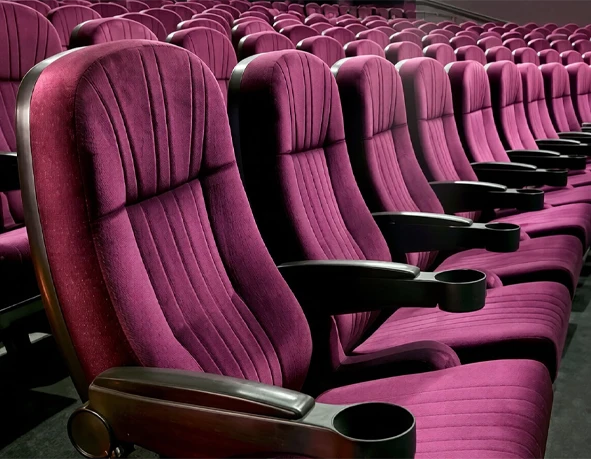
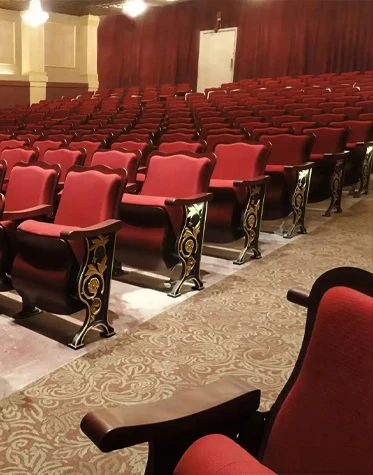
The “seat pan” is the lower portion supporting the seat surface or cushion. The “seat back” supports the upper body. Armrests, end panels, aisle lights, cup holders, and tablet arms may also be included.
With fixed theater seating, upholstery choices can influence appearance, comfort, maintenance, and durability. Fixed auditorium seating often has to serve several audiences — a school auditorium, for example, might host student assemblies in the morning and a theatrical performance at night, so the seat should be comfortable enough for longer events but durable enough for frequent use.

“Preferred Seating helped us turn project requirements into a seating solution that worked for our building, our budget, and our audience.”
Preferred Seating
Trusted by Theaters, Auditoriums & Stadiums Nationwide
Frequently Asked Questions
Everything you need to know about fixed seating, planning, and installation.
What’s the difference between fixed and portable seating?
Fixed seating is permanently mounted to the floor or to risers, which maximizes capacity and creates consistent sightlines and aisle spacing. Portable seating can be moved or stored, offering flexibility for multi-use spaces, but typically at some cost to capacity and uniformity.
How do I know what row spacing and seat centers to use?
Row spacing and seat centers depend on your venue type, local building codes, and how the space will be used. Preferred Seating works with you and your project professionals to recommend spacing that balances comfort, capacity, and code compliance.
Can fixed seating be installed in an existing building?
Yes. Fixed seating can be installed in both new construction and renovations. Existing concrete, wood floors, sloped floors, or raised platforms all factor into the installation approach, and our team can evaluate your space to recommend the right mounting method.
Does Preferred Seating handle layout and accessibility requirements?
Yes. We help customers plan aisles, exits, accessible positions, and companion seating from the start, working with local authorities and project professionals to coordinate a seating plan that meets accessibility requirements.
Upgrade Your Venue Today
Whether your project involves fixed theater seating, auditorium seating, or stadium seating, start with the room and the people who will use it. Then choose a seating system that supports both. Preferred Seating can help turn those project requirements into a practical seating solution designed for comfort, durability, appearance, and long-term value.