



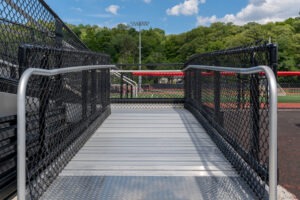
Creating an ADA compliant stadium is no longer just about checking a box or meeting legal minimums. Today, it’s about offering a welcoming, inclusive experience where everyone—no matter their mobility or physical condition—feels valued and accommodated. If your goal is to build a reputation as a forward-thinking, community-driven venue then accessible bleachers, seating for wheelchair users, and companion spots should be fundamental parts of your stadium seating design.
Let’s dive into what really matters when it comes to ADA audience seating. We’ll walk through best practices, common pitfalls, and the long-term benefits of doing it right.
Why ADA Compliance Is About More Than the Bare Minimum
So, your stadium design technically passes the accessibility test. That’s great—but is it truly welcoming? Being an ADA compliant stadium isn’t just about avoiding legal trouble. It’s about embracing the broader values of inclusion, dignity, and comfort for all spectators.
The Americans with Disabilities Act (ADA) outlines specific guidelines on how many wheelchair-accessible seating spaces are required based on total venue capacity. For example:
- 1 accessible space for stadiums with 4–25 seats
- 2 spaces for 26–50 seats
- 4 spaces for 51–150 seats
- 5 spaces for 151–300 seats
- 6 spaces for 301–500 seats
- For stadiums with 501 to 5,000 seats: 6 plus 1 for every additional 150 seats
But smart stadium operators go beyond the minimum. Why? Because inclusivity pays off—literally. Spectators who feel respected are more likely to become repeat customers, and they’ll tell others about their positive experiences.
Placement Matters: Where You Put Your Accessible Seating Can Make or Break the Experience
 One of the biggest mistakes in ADA stadium design? Locating accessible sections in distant corners, disconnected from the primary event space. Just imagine coming to a game with friends but being forced to sit away from them because your wheelchair doesn’t fit in the same row. Not fun.
Here’s how to do it better:
- Disperse wheelchair spaces throughout the stadium. Different people have different preferences. Some want to sit closer to the field; others may prefer a quieter corner.
- Include companion seating. Don’t make guests in wheelchairs sit alone. Companion seating should be adjacent and easy to reserve together.
- Mix up your seat types. Portable or low-rise bleachers in some sections may work better for older stadiums or community fields. Give people choices.
When designing a truly ADA compliant stadium, layout matters just as much as quantity. Your goal is to make every guest feel like they belong—not like an afterthought.
Avoid This Pitfall: Poor Sightlines
Picture this: a packed stadium, fans jumping and cheering… and someone in a wheelchair sees only the back of someone’s jersey. Unfortunately, this is the reality in many poorly planned facilities.
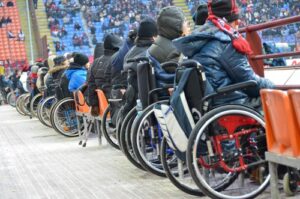 Wheelchair-accessible seating must offer an unobstructed view of the game, performance, or event. If it doesn’t, then technically you may be compliant, but practically you’re failing your guests.
Think about:
- Seat elevation: Should the section be slightly raised?
- Proximity to obstructions: Are railings or signs blocking the view?
- Line-of-sight during full-capacity events: Does everyone still have a view when the crowd stands up?
Creating a good experience means stepping into the shoes (or wheels) of your guests.
The Business Case for Investing in Accessible Bleachers
Still on the fence about upgrading? Let’s look at the bottom line.
Investing in accessible bleachers and thoughtful layout planning leads to increased ticket sales. Studies show accessible sections often sell out quickly. Why? Because they serve a specific, underserved market—people who, until now, may have been unable to enjoy a night out at a local game or concert.
Here are real benefits:
- Revenue increases. People are willing to travel farther for a stadium that accommodates them comfortably.
- Repeat customers. A great experience leads to loyalty.
- Community goodwill. A reputation as an inclusive venue means more bookings, partnerships, and positive PR.
- Increased group attendance. Families and groups are more likely to attend when everyone can sit together, thanks to companion seating.
Accessible upgrades aren’t just ethical. They’re strategic.
Enhancing Accessibility Beyond Seating
Seating is critical, but what about the rest of the experience?
- Accessible restrooms: Close to accessible seating and clearly marked.
- Wide walkways and ramps: For easy navigation.
- The guest journey begins the moment they pull in, making accessible parking and entrances a top priority.
- Accessible picnic tables and concessions: Include areas where guests can grab food and eat without barriers.
A stadium that gets the whole experience right will always stand out.
Your Stadium, Their Day Out
 For someone in a wheelchair or with mobility needs, attending an event can be emotionally taxing. But it doesn’t have to be.
Imagine a stadium where they don’t have to ask for help every step of the way. Where they can find their seat, enjoy a hot dog, cheer with friends, and leave through a smooth ramp without issue.
That’s not just accessibility. That’s respect.
Final Thoughts: Accessibility Is the Future of Spectator Seating
Designing an ADA compliant stadium isn’t just about following the law—it’s about building a space that serves the whole community. With thoughtful design, proper quantities of wheelchair-accessible seating, smart placement of companion seating, and the installation of quality accessible bleachers, your venue will become a destination for all.
The message is clear: Everyone deserves a seat at the game. And you have the power to make that happen.


Audio to Text
31 Jul 2025ADA compliance in large venues can be tricky — I appreciate the range of solutions mentioned here, especially the inclusion of telescopic and portable options. It’s encouraging to see flexibility built into designs to accommodate different event types and space constraints.