Replacing an entire bleacher system can be expensive, disruptive, and sometimes unnecessary. For schools, colleges, athletic facilities, and community stadiums with structurally sound bleachers, there may be a more practical solution: installing individual stadium seats on the existing seating structure. Stadium seats for existing bleachers give facility owners an opportunity to improve spectator comfort without automatically committing to complete bleacher replacement. Instead of sitting on long, backless benches, fans can enjoy individual seats with supportive backs and clearly defined seating spaces.
For athletic directors working with limited budgets, bleacher seat upgrades can be particularly appealing. They provide a way to improve an aging facility while preserving much of the original investment.
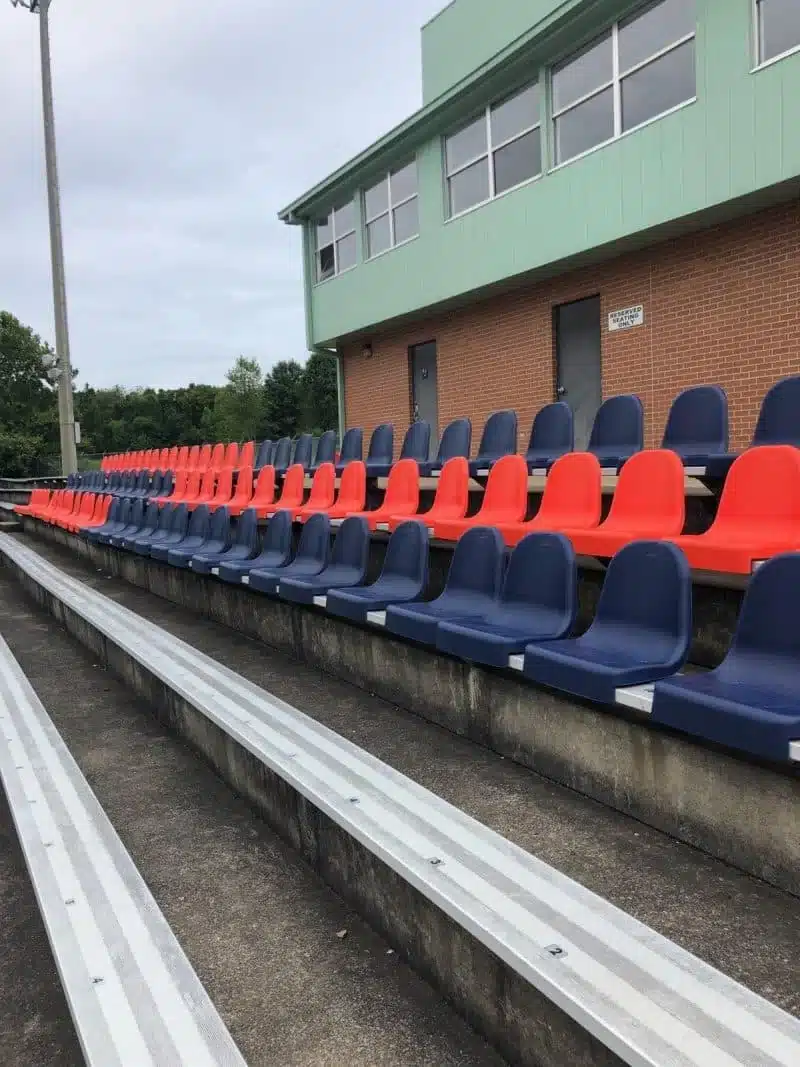
This approach is commonly called retrofit stadium seating. However, not every seat fits every bleacher system, and successful installation requires more than choosing attractive chairs. Understanding how retrofit seats work, which attachment methods are appropriate, and what materials offer lasting value can help you make an informed purchasing decision.
1. Understanding Stadium Seats for Existing Bleachers
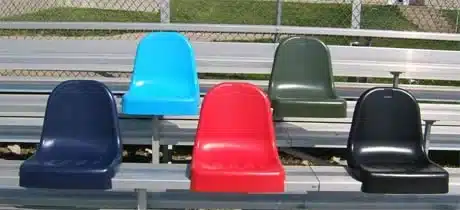
What Is Retrofit Stadium Seating?
Retrofitting means modifying or upgrading an existing structure without completely replacing it. In stadium seating, this typically involves attaching individual seats to suitable existing bleacher components. The goal is to provide improved comfort while retaining the original seating structure wherever practical.
Traditional bleachers usually consist of long horizontal seating boards supported by a metal framework. Although this arrangement accommodates large crowds, spectators often have little back support and no clearly defined individual seating space. Retrofit stadium seating changes that experience by adding seats designed specifically for compatible bleacher installations.
Consider a high school football stadium built 20 years ago. Its aluminum bleachers remain serviceable, but spectators complain that the seating is uncomfortable. The school wants to improve the facility, yet replacing the entire grandstand would consume money needed for other athletic programs. Rather than immediately planning a major construction project, administrators could investigate whether individual seats can be attached to the existing bleachers.
This is where stadium seats for existing bleachers become worth exploring.
Types of Bleachers That May Be Suitable
Bleacher systems vary considerably. Some are permanent outdoor structures, while others are retractable seating systems commonly found in school gymnasiums. Fixed outdoor aluminum bleachers are often candidates for evaluation because their seating boards and supporting framework may accommodate an engineered attachment system. Steel-supported grandstands may offer additional possibilities, depending on their design and condition.
Wooden bleachers require special attention. Aging wood, loose connections, deterioration, and moisture damage can affect whether a retrofit is practical. Retractable gymnasium bleachers present different challenges. Any addition must be specifically approved for the system, including its folding movement, storage clearance, and operating loads.
Bleacher seat upgrades should never be assumed compatible simply because the existing benches appear sturdy. A qualified professional should evaluate the structure, proposed seating loads, and installation method before a project proceeds.
Permanent Seats Versus Removable Seating
One important distinction is whether you want permanently installed chairs or seats that can be removed. Permanent retrofit seats are attached using approved mounting hardware. They establish consistent seating locations and reduce the need to distribute seating accessories before events. Removable stadium chairs offer greater flexibility. Some facilities use portable or detachable seating for selected events, but these products must be approved for the intended bleacher arrangement.
For schools hosting frequent football, baseball, soccer, or track events, permanent retrofit stadium seating may provide a more convenient long-term solution. Removable seats may be more appropriate where seating arrangements change frequently. Before purchasing, ask the supplier whether the proposed product is intended for permanent attachment, supervised temporary installation, or individual portable use.
Understanding Seating Capacity
A bleacher bench may accommodate spectators at an assumed allocation of space per person. Individual seats introduce fixed widths and gaps that can change the actual number of spectators accommodated. This is an important consideration when evaluating stadium seats for existing bleachers. For example, a school might plan to replace a section of bench seating with individual chairs. After accounting for chair widths, mounting clearances, and required circulation, the section may accommodate fewer spectators.
That doesn’t necessarily make the project unattractive. Reserved seats, improved comfort, and more organized ticketing may provide advantages. Nevertheless, capacity should be calculated before purchasing, not discovered after installation.
2. Attachment Systems and Important Installation Terminology
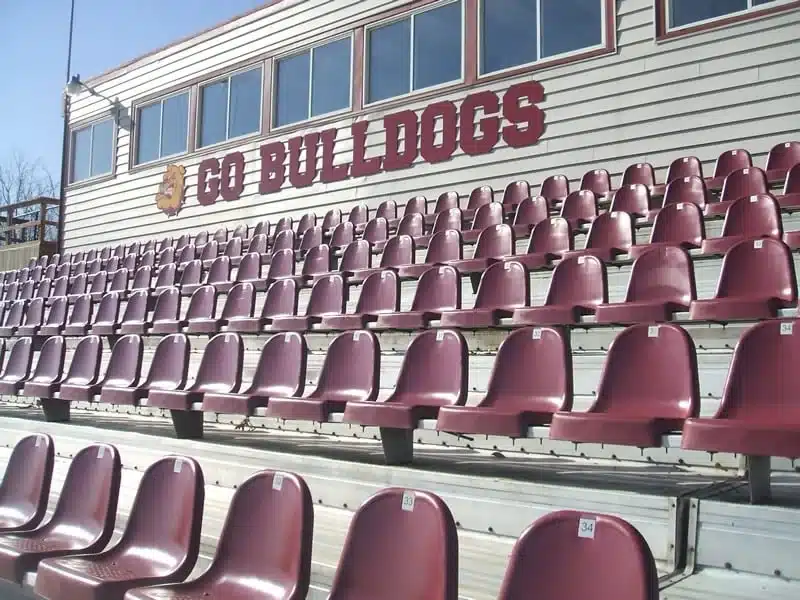
Understanding How Seats Attach to Existing Bleachers
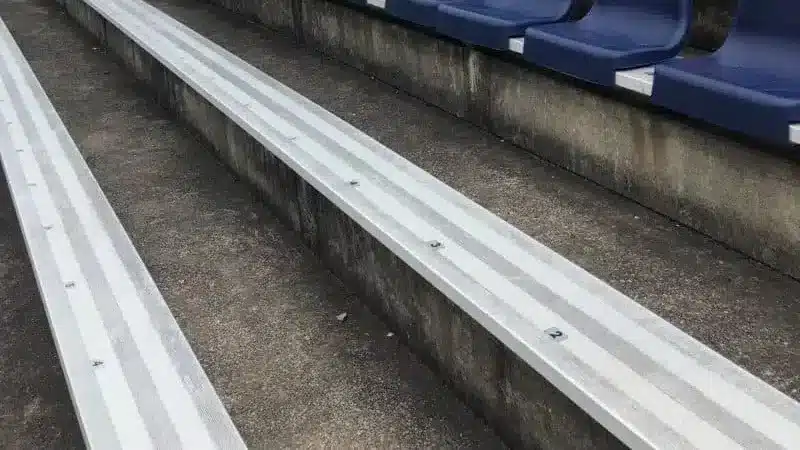
The attachment method is one of the most important elements of any retrofit project. When evaluating bleacher seat upgrades, you’ll encounter several technical terms that describe how seating connects to the existing structure. The first is the seat board. This is the horizontal surface on which spectators currently sit. Many older bleachers use extruded aluminum boards, although wood and other materials are also found.
The second is the mounting bracket. This component connects the new seat to an approved supporting surface or structure. Depending on the product, the mounting system may involve engineered clamps, brackets, fasteners, or other manufacturer-specified connections. The third term is structural support. This refers to the underlying framework that carries the weight of the seating system and spectators.
Understanding these differences matters because retrofit stadium seating cannot safely depend on assumptions about the strength of an existing bench. A mounting system must be appropriate for the seat, the bleacher components, and the loads transferred into the supporting structure.
Why Bleacher Dimensions Matter
Before ordering stadium seats for existing bleachers, a supplier will need information about the existing installation. Start with the width and depth of the seat boards. These measurements help identify possible attachment arrangements. Next, record the vertical and horizontal spacing between rows. Row spacing affects the room available for chair backs, seating surfaces, and people moving through the bleachers.
A seat that fits on an aluminum board may still project too far into the passage between rows. Other important measurements include mounting-edge profiles, existing fastener locations, and the dimensions of any proposed attachment points. Measurements should be supported by photographs. A close-up photograph of the seat board profile can be particularly valuable when determining whether a compatible mounting system may be available.
What Is Row Depth?
Row depth generally describes the horizontal distance allocated to a seating row. It is especially important when discussing bleacher seat upgrades because adding individual chair backs can affect how spectators enter and leave their seats. Some retrofit products are designed for restricted spaces. Others require greater clearance.
Don’t assume that two products with similar seat widths have identical space requirements. The seat’s overall depth, backrest position, and mounting arrangement can produce different results. When requesting retrofit stadium seating, ask the supplier to verify the occupied and unoccupied space requirements of the proposed model.
What Are Mounting Loads?
A chair must support more than the static weight of someone sitting quietly.
Spectators shift position, lean against backs, stand up, and sometimes place considerable force on seating components. These actions produce loads that pass through the seat and its mounting hardware into the existing bleacher structure. For this reason, stadium seats for existing bleachers should be supported by appropriate product engineering and structural review.
The relevant evaluation may include vertical loads, forces against backrests, mounting hardware capacity, and the ability of the original structure to accept additional connections.
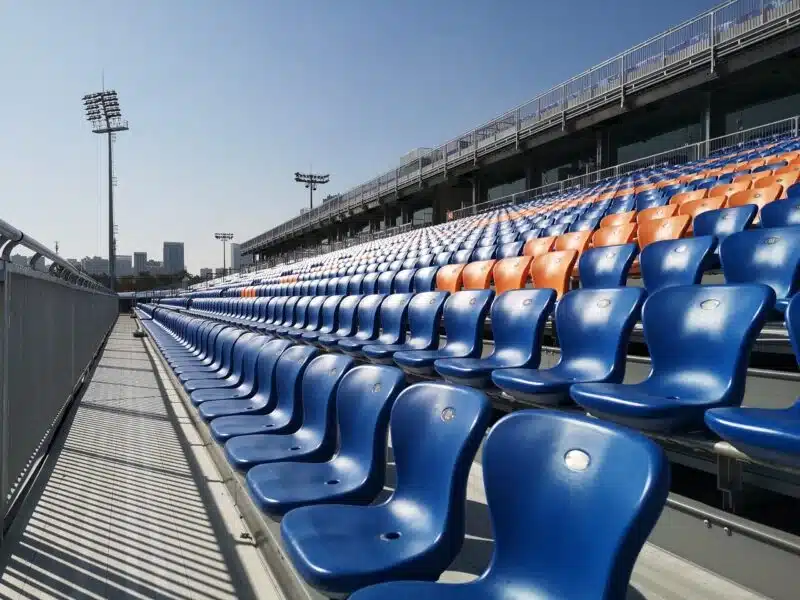
Drilling new holes or modifying structural members without authorization can weaken components or invalidate existing engineering assumptions. Ask your seating supplier for approved attachment details. Where necessary, involve a qualified structural engineer and the original bleacher manufacturer.
Safety, Accessibility, and Building Requirements
Comfort is important, but public safety comes first. Bleacher seat upgrades must account for existing aisles, stairs, handrails, guards, wheelchair spaces, companion seating, and emergency exit routes. Adding chair backs or changing seat locations can affect circulation even when the overall bleacher structure remains unchanged. The International Code Council publishes ICC 300, a standard covering bleachers, grandstands, and folding or telescopic seating systems.
The applicable edition, local building code, accessibility requirements, and approval procedures should be confirmed for the specific facility. Schools should also consider whether the existing bleachers require repairs or safety improvements unrelated to the seating upgrade. A seating retrofit is not a substitute for correcting unsafe structural conditions.
The most successful retrofit stadium seating projects combine improved spectator comfort with carefully verified installation requirements.
3. Selecting Seat Materials for Durability and Comfort
Why Material Selection Matters
The materials used in a stadium chair influence its appearance, maintenance requirements, weather resistance, and expected service life.
Outdoor seating faces challenges that indoor auditorium chairs rarely encounter. Summer heat, sunlight, rain, freezing temperatures, and repeated exposure to moisture can affect performance. For this reason, buyers comparing stadium seats for existing bleachers should examine how the products are manufactured, not just how they look in photographs.
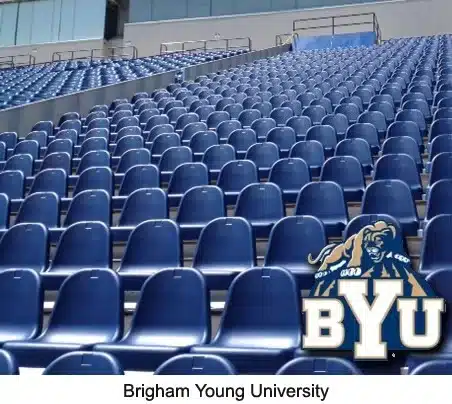
High-Density Polyethylene Seating
High-density polyethylene, commonly called HDPE, is a plastic used in many outdoor seating products. Depending on the formulation and manufacturing process, polyethylene seating can offer impact resistance, moisture resistance, and relatively easy cleaning. UV stabilizers and suitable pigments can help reduce sunlight-related deterioration.
However, not all polyethylene products perform equally. Material grade, wall thickness, seat design, additives, and manufacturing quality affect durability. When considering bleacher seat upgrades, ask whether the chair is intended for prolonged outdoor exposure and what warranty coverage is provided. Also ask how the manufacturer addresses fading, cracking, deformation, and replacement parts.
Injection-Molded Plastic Seats
Injection molding is a manufacturing process in which heated plastic material is shaped inside a mold. This process allows manufacturers to produce contoured seats with consistent shapes and detailed features. Many retrofit stadium seating products use molded plastic components because they can provide a combination of comfort, durability, and design flexibility.
A molded seat may include a curved sitting surface, integrated drainage features, and a backrest shaped to support the spectator. Some designs also incorporate textured or slip-resistant seating surfaces. For schools, these features can be valuable because stadium seating receives frequent use from spectators of different ages. An easily cleaned surface can also reduce routine maintenance.
Metal Components and Corrosion Resistance
Although plastic seating surfaces receive the most attention, metal components are equally important. Mounting brackets, fasteners, and supporting hardware may be exposed to rain, humidity, and temperature changes. Corrosion resistance should therefore be included in any evaluation of stadium seats for existing bleachers. Depending on the design and environmental conditions, manufacturers may specify aluminum, stainless steel, galvanized steel, or protected steel components.
Coatings and material compatibility are important, particularly where dissimilar metals come into contact. Ask about the proposed hardware and whether it is suitable for your facility’s climate and exposure conditions. A coastal stadium and a covered school grandstand may face very different maintenance demands.
Comfort and Ergonomic Design
Anyone who has spent three hours watching a football game on a narrow aluminum bench understands why back support matters. Comfortable seating isn’t merely a luxury. It can influence how spectators experience an event, especially older visitors and those who find unsupported benches difficult to use. Ergonomics refers to designing products around the way people use them.
For bleacher seat upgrades, important comfort features may include seat contour, backrest shape, seat width, edge design, and available sitting space. A high backrest may feel more supportive than a shallow one, but it must also fit within the available bleacher arrangement. Likewise, a generously sized seat may improve comfort while reducing the number of seats that fit into a section.
The best solution balances comfort, capacity, and available space.
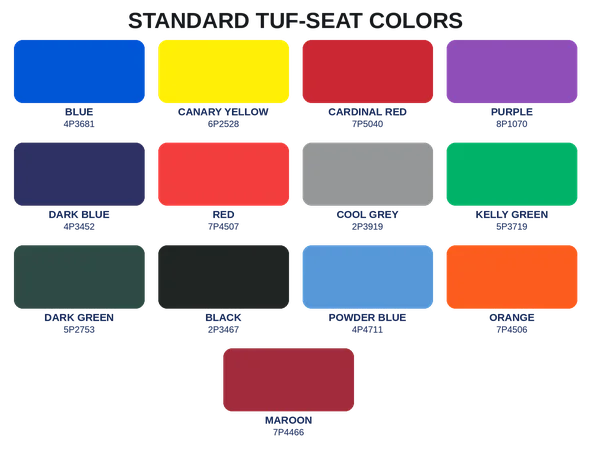
Team Colors and School Identity
Retrofit stadium seating can also improve the visual appearance of a school athletic facility. Instead of presenting rows of plain metal benches, schools may be able to install individual seating in selected team colors. Some manufacturers offer color combinations or branding options, subject to minimum quantities and product availability.
Imagine a stadium where reserved seating sections reflect the school’s colors. The improvement becomes visible even before the first spectator arrives. However, appearance should not outweigh practical requirements. Select a product for its mounting compatibility, durability, and usability first. Treat attractive colors and customization as additional benefits.
4. Purchasing Options and Budget Planning for Schools
Where Can You Buy Stadium Seats for Existing Bleachers?
Schools and athletic facilities can purchase retrofit seating through specialized stadium seating suppliers. A company experienced with bleacher renovation can help determine whether individual chairs are appropriate for an existing installation and what information is needed for a meaningful quotation. Preferred Seating offers stadium seating solutions, including products intended for upgrading existing bleachers.
Its Tuf Stadium Seating is an option worth investigating for facilities interested in adding individual seating and back support to suitable existing bleachers. When shopping for stadium seats for existing bleachers, request product details rather than selecting chairs solely from photographs.
The supplier should be able to explain the available mounting options, product specifications, quantities, finishes, and installation considerations. Most importantly, obtain confirmation that the proposed seating system is appropriate for your bleachers.
Individual Retrofit Seats Versus Full Stadium Chairs
Not every project requires the same level of improvement. For schools primarily concerned with comfort, individual molded seats with backs may provide the desired upgrade. Facilities seeking more substantial renovation may prefer conventional fixed stadium chairs with separate supporting standards. These systems can offer additional design possibilities but may require more extensive structural modifications.
Retrofit stadium seating generally focuses on retaining existing bleacher components, while a larger seating renovation may involve replacing seat boards, changing supports, or rebuilding entire sections. Understanding that distinction helps prevent confusion when comparing quotations. A less expensive individual seat does not necessarily mean the completed project will be less expensive if extensive mounting modifications are required.
Can Schools Upgrade Only Certain Sections?
Yes, partial projects may be possible when the selected seating and existing structure are suitable.
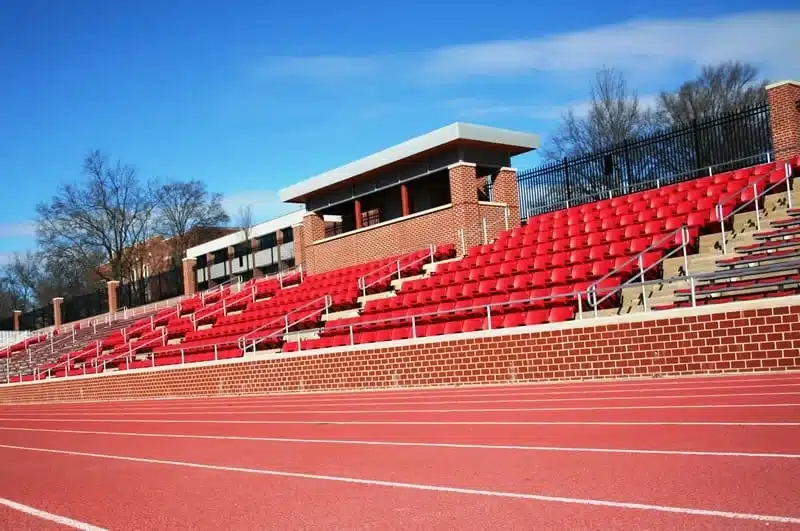
Instead of converting an entire stadium, schools can investigate bleacher seat upgrades for selected sections. One option is to begin with reserved seating near midfield. Another is to upgrade a designated section for season ticket holders, alumni, or supporters. A school might also consider improvements in a smaller athletic facility before undertaking a larger stadium project.
Partial installation can help spread capital expenditures across multiple budget years.
However, phased projects require careful planning. The school should establish a consistent seating layout, preserve required circulation, and verify that future phases can use compatible products. It is also wise to ask about long-term product availability before selecting a model.
What Determines the Cost?
The cost of stadium seats for existing bleachers depends on several factors. Seat quantity is one of the most obvious. Larger projects may qualify for different unit pricing, although the overall investment naturally increases. Other cost considerations include the seat model, mounting hardware, shipping, installation labor, and necessary structural modifications.
Existing bleacher conditions can have a substantial effect on the final price. A project involving sound aluminum seat boards and compatible attachments may be simpler than one requiring major repairs. Access to the seating area also matters. Restricted working space, unusual mounting conditions, or difficult equipment access can affect installation.
When reviewing quotations for bleacher seat upgrades, distinguish product costs from the full installed project cost. Ask whether the proposal includes engineering review, hardware, removal of old components, delivery, installation, permits, and final inspections where required.
Fundraising and Premium Seating Opportunities
For schools facing tight athletic budgets, fundraising may help support seating improvement. A booster organization could sponsor a defined seating section. Alumni contributions or donor recognition programs might provide additional support. Schools may also explore premium reserved seating programs where appropriate.
For example, a school could identify a section suitable for individual chairs and offer season-ticket packages that include improved seating. The resulting revenue might help offset part of the renovation investment. That said, retrofit stadium seating should not be promoted as guaranteed to increase attendance, concessions, or ticket revenue.
Those outcomes depend on community demand, ticket policies, event popularity, and other factors. The strongest financial justification begins with a realistic project budget and measurable facility needs.
Planning Installation Around the Athletic Calendar
Scheduling is another important part of successful bleacher seat upgrades. For schools, summer breaks and athletic off seasons may provide opportunities to complete work with fewer disruptions. However, equipment availability, shipping, engineering review, and contractor schedules should be considered well in advance. If the school wants new seating installed before the first home football game, begin discussions early enough to accommodate site evaluation and any required approvals.
A practical installation schedule should include time for inspecting the existing bleachers, confirming mounting compatibility, ordering products, and completing final safety checks. Rushing an installation to meet an opening-game deadline is rarely worth compromising the evaluation process.
5. How to Choose the Right Supplier and Request a Quote
Start With an Existing Bleacher Assessment
Before requesting stadium seats for existing bleachers, gather information about your current seating system. Record the approximate age of the bleachers, their manufacturer if known, and whether they are permanent, portable, or retractable. Identify the number of rows and the approximate number of individual chairs you want to install.
Photograph the seating boards from above and below. Include clear views of the support structure, mounting connections, and row arrangement. If available, obtain the original bleacher drawings, product documentation, and recent inspection reports. These materials help a seating supplier understand the existing conditions.
Ask About Compatibility Before Price
Price matters, especially for public schools. But compatibility must come first. When discussing retrofit stadium seating with a supplier, ask how the proposed seats will attach to the existing bleachers. Find out what dimensions and photographs are necessary to evaluate the installation. Ask whether the supplier has suitable mounting details and whether a structural review is required.
Also determine who is responsible for confirming applicable building and accessibility requirements. A clear explanation of installation responsibilities is often more valuable than a quick estimate based only on seat quantity.
Compare the Full Value of Bleacher Seat Upgrades
A good purchasing decision considers more than the initial invoice. Review the manufacturer’s warranty, cleaning recommendations, replacement-part availability, and hardware requirements. Ask whether damaged seats can be replaced individually or whether repairs require larger assemblies. Consider how the new seating affects spectator movement, routine inspections, and ongoing maintenance.
For bleacher seat upgrades, long-term value comes from appropriate design, installation, durability, and serviceability. A lower-priced product may not represent savings if it creates higher maintenance costs or requires extensive modification. Conversely, a straightforward retrofit may be a practical investment when the underlying bleacher system is in good condition.
Questions Worth Asking Before Ordering
When contacting a supplier about stadium seats for existing bleachers, prepare several important questions:
- Can the proposed seats attach to my existing bleacher system?
- What measurements, photographs, and drawings do you need?
- What materials are used in the seats and mounting hardware?
- Will adding individual chairs change seating capacity?
- Are special installation tools or structural modifications required?
- Who confirms the installation meets applicable safety requirements?
- What warranty and replacement part options are available?
- Can the project be completed in phases?
These questions help make quotations easier to compare and reduce unexpected problems after an order is placed.
Working With Preferred Seating
Preferred Seating offers products for stadiums, arenas, schools, and other spectator facilities. For facilities considering retrofit stadium seating, the company provides bleacher seating options and information about its Tuf seating products.
The best starting point is a conversation about your existing bleachers, project goals, and budget. Provide photographs and available measurements, then ask which seating solutions may be appropriate. A supplier can help identify products for further evaluation and explain what additional verification may be required before ordering.
Conclusion: Upgrade Your Bleachers Without Automatically Replacing Them
An older stadium does not always need an entirely new bleacher system to offer spectators a better experience. When existing structures are suitable, stadium seats for existing bleachers can provide individual seating, improved back support, and a more inviting appearance. Thoughtfully planned bleacher seat upgrades may also allow schools to improve selected sections while managing limited athletic budgets.
The key is choosing the right product for the existing structure. Successful retrofit stadium seating requires attention to mounting compatibility, materials, row spacing, seating capacity, accessibility, and structural safety.
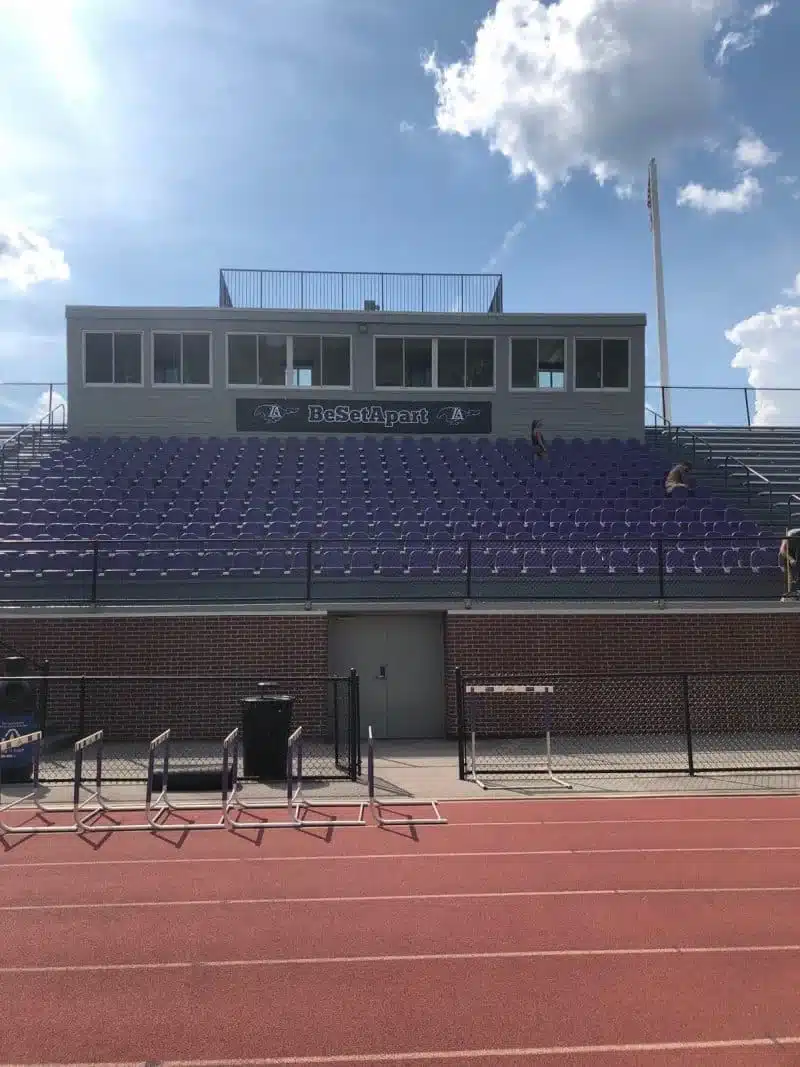
If you’re considering upgrading a high school stadium, college athletic facility, or community sports venue, start by evaluating the bleachers you already have. View some of our stadium installations. Contact Preferred Seating to discuss your project, explore available stadium seating options, and determine what information is needed to request a quote.
Your next stadium improvement may begin with better seats rather than an entirely new set of bleachers.