


 When spring and summer roll in, so do the sounds of cheering crowds, the crack of the bat, and the unmistakable clamor of bleachers filling up for another sports season. But here’s the question many facility managers forget to ask: Are your bleachers clean, safe, and up to code? It might not sound glamorous, but regular cleaning and maintenance of your bleachers can make all the difference for safety, longevity, and fan experience.
In this guide, we’ll explore best practices for cleaning bleachers, what proper maintenance involves, and why ADA-friendly design should be a top concern in today’s stadium planning.
Why Clean Bleachers Matter More Than You Think
Bleachers are more than just seats. They’re community hubs, cheering sections, and often the first impression of your sports facility. Over time, food spills, sticky sodas, dirt, and debris build up. Without consistent cleaning, this gunk doesn’t just look bad—it damages the structure.
Worse, neglecting cleaning tasks can lead to bigger problems: mold growth, surface corrosion, trip hazards, and structural weakening. Regular cleaning of your bleachers isn’t just about aesthetics—it’s part of responsible venue maintenance.
How to Clean Bleachers: Soap, Water, and a Little Elbow Grease
 Let’s start with the basics.
For aluminum bleachers—particularly anodized ones—a basic soap and water wash can be surprisingly effective. Anodized aluminum resists corrosion and is easier to clean due to its treated surface.
Here’s how:
- Fill a bucket with warm, soapy water
- Use a soft-bristle brush or non-abrasive cloth
- Scrub each row, paying attention to gum, grime, and residue
- Rinse thoroughly and allow to air dry
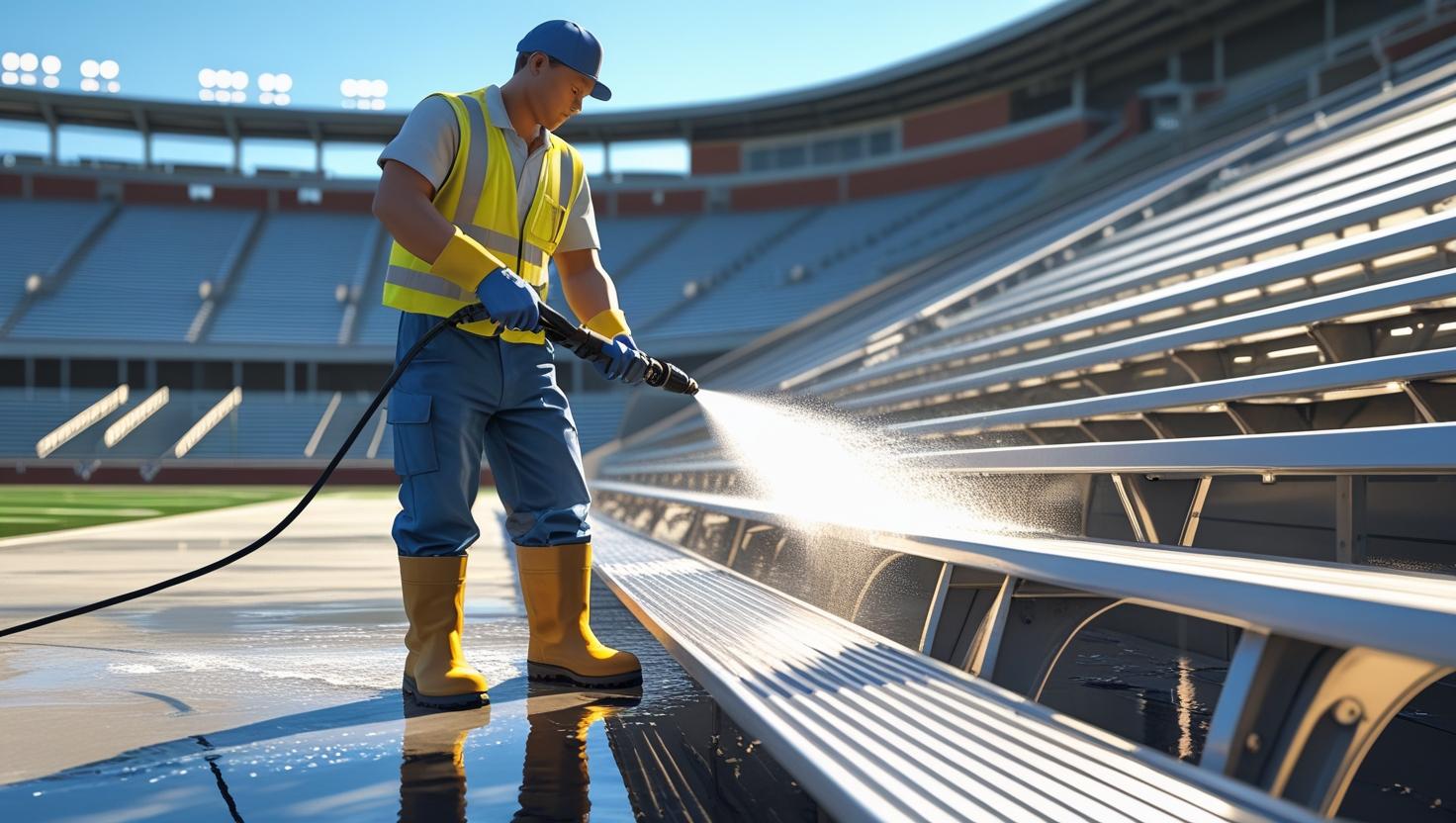
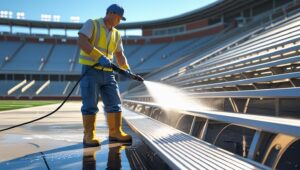
Prefer something quicker? Pressure washers are ideal for large-scale cleaning jobs. Use hot water and a gentle detergent, but avoid harsh, caustic chemicals—they leave behind slippery residues that could be dangerous for fans.
Keep an eye out for sticky spills, especially sugary drinks. These can attract bugs and accelerate material breakdown. A high PSI spray can handle that with ease.
Cleaning Bleachers Is a Great Time to Perform Maintenance
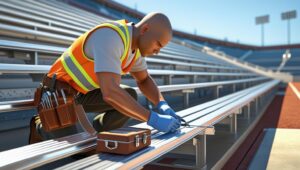
There’s no better time to inspect your bleachers than while you’re giving them a good scrubbing.
Here’s a quick checklist:
- Are seat planks straight and secured?
- Are the bolts tight and rust-free?
- Any visible cracks in the support structure?
- Guardrails in place and firm?
Don’t forget to check ADA accessible areas, including ramps, platforms, and wheelchair seating locations. These areas must be structurally sound and up to code. Keeping your bleachers clean is only half the battle—the other half is long-term, proactive bleachers maintenance.
Annual inspections by a professional engineer or certified manufacturer are essential. Many provide maintenance kits and checklists to simplify the process.
ADA Accessible Seating: Don’t Just Clean It—Respect It
 In today’s inclusive world, ADA accessible seating is not optional—it’s legally required. But legal standards should be the floor, not the ceiling.
When cleaning bleachers, pay special attention to wheelchair zones, companion seats, and entry ramps. These spaces must not only be spotless but also free of obstacles, intact, and visibly marked.
The ADA sets the following minimums:
- 1 at least accessible seating space for facilities with 4 to 25 total seats
- 2 for 26 to 50 seats
- 4 for 51 to 150 seats
- 5 for 151 to 300 seats
- 6 for 301 to 500 seats
- For venues with 501+, 6 seats plus 1 per additional 150
Clean doesn’t just mean pretty—it means compliant. Maintenance of ADA accessible seating ensures safety and dignity for every guest.
When Cleaning Isn’t Enough: Signs It’s Time to Replace
 So your bleachers are clean—but are they still safe?
Here’s how to tell if your bleachers are becoming outdated:
- Rusted bolts and corroded frames
- Lack of guardrails or handrails
- Gaps wider than 4 inches between parts
- No ADA accessible spaces or seating
Today’s bleachers come with modern features that older sets lack: safer handrails, slip-resistant surfaces, and more intuitive designs. Maintenance can only go so far. Sometimes, the best decision is to renovate or replace.
Bleacher Maintenance Schedules That Work
Want your bleachers to last 10, 15, even 20 years? Then set up a maintenance calendar. Here’s a model that works:
- Weekly: Spot clean for spills, remove trash, check for loose bolts
- Monthly: Deep cleaning of high-traffic areas
- Quarterly: Safety inspection, tighten connections, test ADA areas
- Annually: Professional inspection with a full maintenance checklist
Just like you wouldn’t skip oil changes on a car, consistent upkeep extends the life of your bleachers. And makes every fan’s experience safer and better.
Final Thoughts: Clean Bleachers Are Happy Bleachers
 Clean bleachers are more than a matter of pride. They reflect your stadium’s commitment to safety, accessibility, and fan comfort. From regular cleaning to code-compliant inspections, proactive maintenance goes hand-in-hand with smart stadium management.
So the next time the crowds roll in for opening day, make sure they’re greeted by gleaming, sturdy, and ADA accessible seating. Because every seat matters—and every spectator deserves to enjoy the game without a second thought.
Want help finding the perfect bleacher setup? Preferred Seating offers anodized aluminum bleachers, ADA-compliant designs, and the expert advice to make sure your seating shines—literally and figuratively.


AI Logo Generator
31 Jul 2025Do you have any tips for maintaining bleachers in high-humidity areas where mold and corrosion are more common? I imagine those conditions can really accelerate wear and create safety concerns if not addressed regularly.